
Fertiglobe Weighs Investment of Over $1.5 Billion in Egyptian Phosphate Processing

Egypt is exploring opportunities to expand its phosphate fertilizer industry through a proposed Fertiglobe project in Ain Sokhna, with investment exceeding $1.5 billion.
The initiative aims to increase the value generated from mineral resources, expand domestic manufacturing, boost production and exports, and attract investment in higher-value industries.
Fertiglobe Considers Processing Egyptian Phosphate
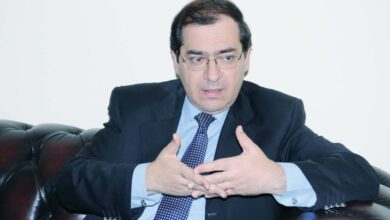
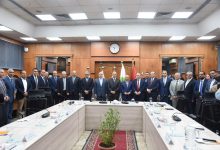
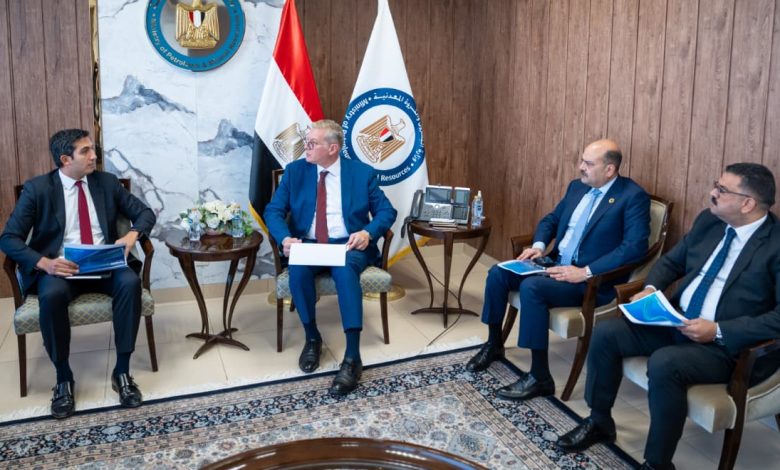
Egypt’s Minister of Petroleum and Mineral Resources, Karim Badawi, met with Fertiglobe CEO Ahmed El-Hoshy and an accompanying delegation to discuss preliminary plans for the complex. Fertiglobe is part of the UAE’s ADNOC Group.
The discussions covered the technical and economic studies required to assess the project’s feasibility, implementation prospects and integration with Egypt’s existing industrial capabilities.
Commercial Production Targeted for 2031
Under the preliminary proposal, the complex would produce 1.3 million metric tons of diammonium phosphate (DAP) fertilizer annually, with commercial production targeted to begin in 2031.
The project remains under study, with assessments covering feedstock, energy, technology and infrastructure requirements to establish the conditions needed for implementation.
Adding Value to Egypt’s Mineral Resources
Badawi said the project offers an opportunity to strengthen integration between mining and downstream manufacturing by converting Egyptian mineral resources into higher-value industrial products.
He stressed the importance of completing the necessary studies to support the development of an integrated complex that would increase production and exports while maximizing the economic returns from natural resources.
Securing Long-Term Phosphate Supplies
Meanwhile, the minister called for coordination between Fertiglobe, the Mineral Resources and Mining Industries Authority and Egypt’s mining sector to identify available sources of phosphate rock and assess their capacity to meet the complex’s long-term requirements.
Reliable feedstock supplies would provide a foundation for sustained operations and the project’s economic assessment.
A Comprehensive Feasibility Study
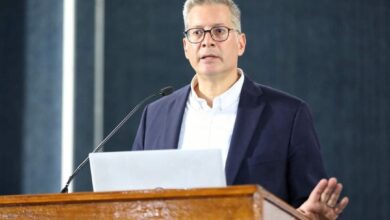
El-Hoshy said Fertiglobe is completing the feasibility study in cooperation with consultants, emphasizing the importance of securing long-term phosphate supplies.
The study covers suitable technology, energy needs and infrastructure requirements.
Assessing energy consumption will be particularly important in estimating operating costs and determining the product’s competitiveness when production begins.
Integrating Phosphoric Acid and Ammonia
The discussions also addressed opportunities to integrate phosphoric acid production with the manufacture of finished fertilizers, drawing on the availability of ammonia and Egypt’s existing industrial infrastructure.
From an economic perspective, this integration could increase domestic industrial participation, retain more value within the production chain and strengthen the competitiveness of the finished product.
Data Sharing to Support Supply Agreements
Both sides discussed accelerating the exchange of technical, geological and commercial data, alongside completing the arrangements needed to examine phosphate rock supply agreements.
These steps would help align resource assessments with the plant’s requirements and clarify supply chain needs, providing a more precise basis for evaluating the project’s implementation prospects.
Export Potential and Supporting Industries
Economically, the proposal offers an opportunity to broaden Egypt’s industrial export base by expanding domestic phosphate processing and producing higher-value fertilizers.
If implemented, the project could also stimulate demand for transport, maintenance and supply services while creating employment opportunities during construction and operation.
Expanded manufacturing could strengthen foreign currency earnings and diversify export products, with the scale of potential returns depending on the study findings and market conditions.
Local AdBlue Production
Separately, the meeting explored opportunities to establish local production of AdBlue, an aqueous urea solution, using domestically produced urea.
The solution is used in vehicles equipped with selective catalytic reduction systems to help reduce nitrogen oxide emissions and improve air quality, offering a potential industrial opportunity with environmental benefits.
Technical and Economic Assessment
Badawi emphasized the importance of assessing production requirements, identifying target applications and evaluating the proposal’s feasibility before determining the next steps.
From an economic perspective, the initiative could expand the industrial uses of locally produced urea while aligning domestic product development with the needs of the transport sector and exhaust treatment technologies.
Institutional Coordination to Support Manufacturing
The meeting was also attended by Alaa El-Din Abdel Fattah, Chairman of the Egyptian Petrochemicals Holding Company, and Yasser Ramadan, Chairman of the Mineral Resources and Mining Industries Authority.
Bringing together the mining and petrochemical sectors highlights the importance of coordinating feedstock availability with manufacturing capabilities to develop a comprehensive assessment of the proposed investment opportunities.